Table of contents
- What Is Search Intent in SEO
- The Four Types of Search Intent
- Search Intent Examples
- How to Find Search Intent
- Why Search Intent Matters in SEO
- How to Optimize Content for Search Intent
- Keyword Intent Analysis with SerpNuts
- Frequently Asked Questions
- What role does user behavior play in determining search intent?
- How does search intent affect on-page SEO elements like titles and meta descriptions?
- What mistakes do Indian websites make when ignoring search intent?
- How often should you review search intent for existing pages?
- Can search intent change over time for the same keyword?
- How does mobile search intent differ in India compared to desktop?
- What is the link between search intent and featured snippet optimization?
- Improve Your Rankings with Search Intent Today
Quick answer: Search intent in SEO is the purpose behind a user's query, whether they seek information, a specific site, or a product to buy. This page explains the four types with examples from India and shows how to match your content for better rankings in 2026.
When your content does not line up with what searchers want, rankings stay low despite good keywords.
You can check the top pages for any term to see the expected format. As a result you create posts that meet reader needs and improve visibility over time.
What Is Search Intent in SEO
Search intent in SEO refers to the goal a user has when typing a query into Google. It shapes content that ranks in India because pages must match what searchers expect at each step of their journey.
Begin by entering your main keyword and scanning the top results for patterns in page type and format. Next, look at related terms to confirm the dominant goal.
Then adjust your headings and sections so they match that goal before you publish.
What tools help identify search intent for SEO in India?
Google Search Console shows the queries driving traffic to your site. SERP features like featured snippets reveal the intent type. Analytics platforms track user behavior after clicks.
For more help on titles and descriptions, read our guide to writing meta descriptions.
The Four Types of Search Intent
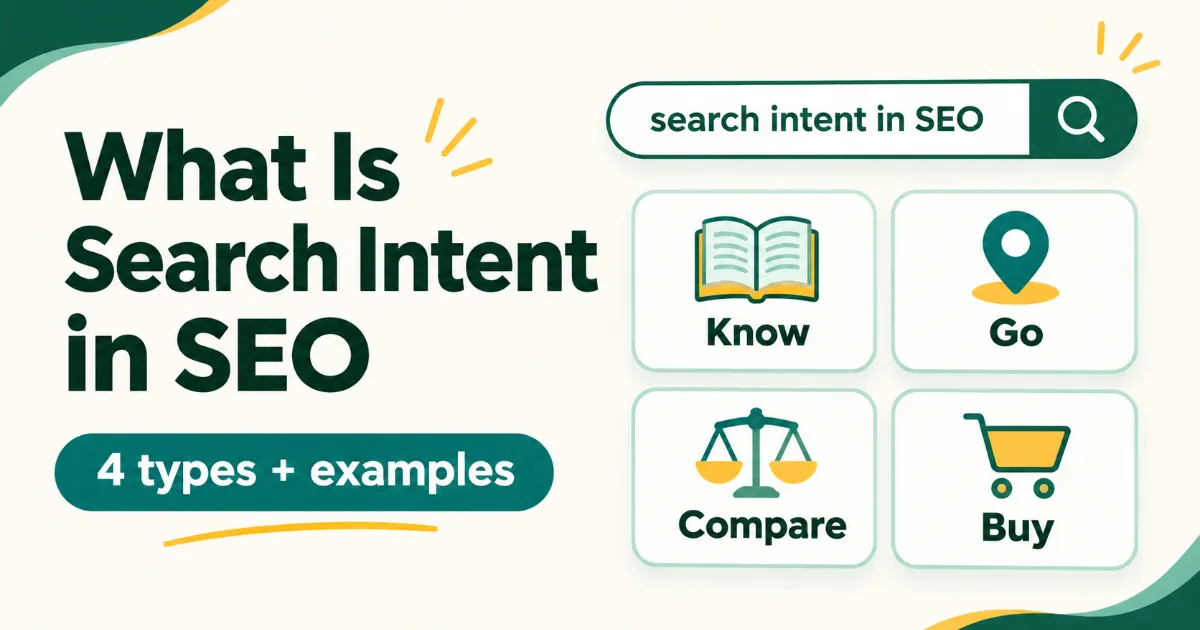
Search intent breaks down into four categories: informational, navigational, commercial investigation and transactional. Knowing them lets you build pages that match what users want instead of guessing. The categories stay the same across markets; the examples below come from Indian searches.
Informational Intent
Informational intent covers queries where people want quick answers or explanations. Users type questions about how something works, what an event involves, or where to find facts. In India this shows up in festival planning queries such as how to prepare for Diwali on a budget. Content that answers these queries needs clear headings and short sections so readers finish the page with the fact they came for.
Navigational Intent
Navigational intent appears when someone already knows the exact site they need. They type the brand or service name to reach it faster than typing the full URL. An Indian banking example is a search for State Bank of India online banking login. Pages that rank here simply need accurate titles and fast load times so the user lands on the right page without extra clicks.
Commercial Investigation Intent
Commercial investigation intent describes users who compare options before deciding. They read reviews, check prices across stores, and weigh features. In India this shows up when shoppers search for best smartphones under 20000 rupees on Flipkart versus Amazon. Strong content lists pros and cons in a table and includes current prices so the reader can move to the next step without opening ten new tabs.
Transactional Intent
Transactional intent means the user is ready to buy, sign up, or complete an action right away. Queries often include words like buy, book, or download. An Indian online shopping example is buy oneplus 12 on Amazon India with cash on delivery. If you create product pages for these queries, keep the buy button visible and the checkout path short. Common search intent mistakes happen when writers mix informational content into transactional pages, which drops conversion rates. For SEO content matching user goals, match the page format to the intent type first. A related factor is how keyword density fits around intent on each page type.
Search Intent Examples
A heading like "Best mutual funds for beginners in 2026" signals commercial investigation intent: the reader is comparing options before investing. The pages that rank offer comparison tables and plain explanations rather than a direct sign-up form.
Another example is the keyword "buy iPhone 16 online India". This points to transactional intent. The winning page shows price comparisons, delivery times and a direct purchase button rather than a long review.
A third case, "IRCTC login", is navigational: the searcher wants the official site, not an article about it. The fourth example, "iPhone 16 vs Samsung S25 India", fits commercial investigation intent and ranks pages that compare features side by side without a buy button at the top.
Why should Indian marketers analyze search intent before creating content?
Matching intent before you write saves you from building the wrong kind of page. Keyword research tells you what people type; intent tells you what they expect to find, which is why user intent vs keyword research matters in practice. Intent based keyword mapping keeps the outline focused on the result pages that already rank.
Google says optimizing for its AI search features works the same way as regular SEO, so a page that clearly matches intent is also easier for AI answers to use. You can plan the outline with our SEO content brief template.
How to Find Search Intent
Search intent in SEO shows up clearly when you study the results that already rank. Start by entering your target keyword in Google and note the dominant page formats that appear. Next examine the SERP features such as featured snippets or knowledge panels because they reveal user goals at a glance. Then read the top three titles and meta descriptions to confirm whether the query leans informational or transactional.
If you run this check on Indian keywords you often see product comparison pages dominate for terms that mix buying signals with research. Analyze SERP for intent this way before you write so your outline matches what Google already rewards.
How can you map keywords to different search intent categories?
Group each term by the main need it expresses. Informational queries ask for explanations or lists while commercial ones compare options and transactional ones include words like buy or price. This quick sort tells you the page type and content depth required.
| Intent Type | Sample Query | Top SERP Feature |
| Informational | How to file ITR online | Featured snippet |
| Transactional | Buy air conditioner 2026 | Shopping results |
| Commercial | Best mutual funds 2026 | Comparison articles |
The table shows how Google search intent signals appear in real results. Use the pattern to decide your heading structure and content length before you start writing.
Why Search Intent Matters in SEO
Search intent in SEO decides if your page earns a top spot or stays buried. When you ignore it, Google sees a mismatch and ranks the content lower while users leave quickly. The result is wasted effort on pages that never connect with the audience needs behind each query.
How does search intent influence SEO rankings in India?
Aligning content with user goals improves relevance and SERP positions. Google's ranking systems aim to show the most helpful result for each query, so a page in the wrong format starts at a disadvantage however good the writing is.
You find search intent by studying the results that already rank. This approach lets you improve rankings with intent instead of guessing what to write next.
How to Optimize Content for Search Intent
Adjust the title and first heading so they state the exact answer a user wants. For informational pages lead with a direct definition followed by clear steps. For transactional pages place the product details and price near the top instead of background text.
If you run the keyword through SerpNuts it returns an outline that already matches the expected page format. Replace generic headings with the suggested ones and rewrite the first paragraph to match the intent type shown by the tool.
Study the top results for keyword intent to see how deep they go, then cover the topic at least as well. Update internal links and images so they support the same goal, and apply the same check whenever you refresh an older post.
Keyword Intent Analysis with SerpNuts
Many marketers assume they must run separate checks to understand keyword intent before they start writing. This view often leads to scattered notes and missed patterns in the results that already rank. A single workflow inside SerpNuts removes those extra steps.
When you enter a keyword the tool labels the search intent at once. It names the likely page format and pulls competitor data from the top results, so you see their word counts, headings and content type in the same view.
This makes keyword intent decisions faster because the generated outline already follows what Google shows. You also get three title suggestions and meta description options to edit. The free plan gives ten content optimizations a month with no card required. Check the search intent for your next keyword free in SerpNuts to run the first one.
Frequently Asked Questions
What role does user behavior play in determining search intent?
Google hasn't published a list of behaviour signals it uses to judge intent. The practical signal for you is the results page itself: the formats Google shows for a query are its current read of what searchers want, so study those before you write.
How does search intent affect on-page SEO elements like titles and meta descriptions?
Search intent shapes the wording of titles and meta descriptions so they match what the user expects right away. An informational query needs a clear definition in the title, whereas a transactional one calls for price or buy signals in the meta text. This alignment raises the chance that the right visitors click through and stay on the page.
What mistakes do Indian websites make when ignoring search intent?
Websites in India often publish content that answers a different goal than the query demands. They create long guides for simple lookup searches, which leads to quick exits and lower rankings. As a result traffic drops because Google sees the page as a poor fit for the actual user need.
How often should you review search intent for existing pages?
Review search intent for live pages every quarter. User needs shift with seasons and trends, so an audit catches when a page no longer matches the current query goal. Update the headings and first paragraph to restore alignment without rewriting the entire piece.
Can search intent change over time for the same keyword?
Search intent for one keyword can shift when trends or seasons change. A term that once drew informational queries may later attract buyers looking for deals. Track the top results periodically to spot these moves and adjust the page format before rankings fall.
How does mobile search intent differ in India compared to desktop?
Phone screens favour short answers and scannable pages, so even when the intent is the same, a mobile reader needs the key answer near the top. Check the results on your phone as well as your laptop, because Google may show different features on each.
What is the link between search intent and featured snippet optimization?
Featured snippets reward content that gives the exact answer type the query seeks. Informational intent calls for a concise definition or list at the top, while commercial queries need comparison points. Match the format to the intent and the snippet appears more often in results.
Improve Your Rankings with Search Intent Today
When you plan a new page, check the top three results on Google first to confirm the dominant search intent in SEO before writing anything. This step shows whether the query needs a how-to guide, a product comparison, or a direct sales page.
Pick the matching format and length that already ranks. Skip pages that mix intents because they rarely hold the top spots.
Enter the same keyword in SerpNuts to receive the labeled outline and suggested titles. Start a free optimization and apply the output to your draft right away.